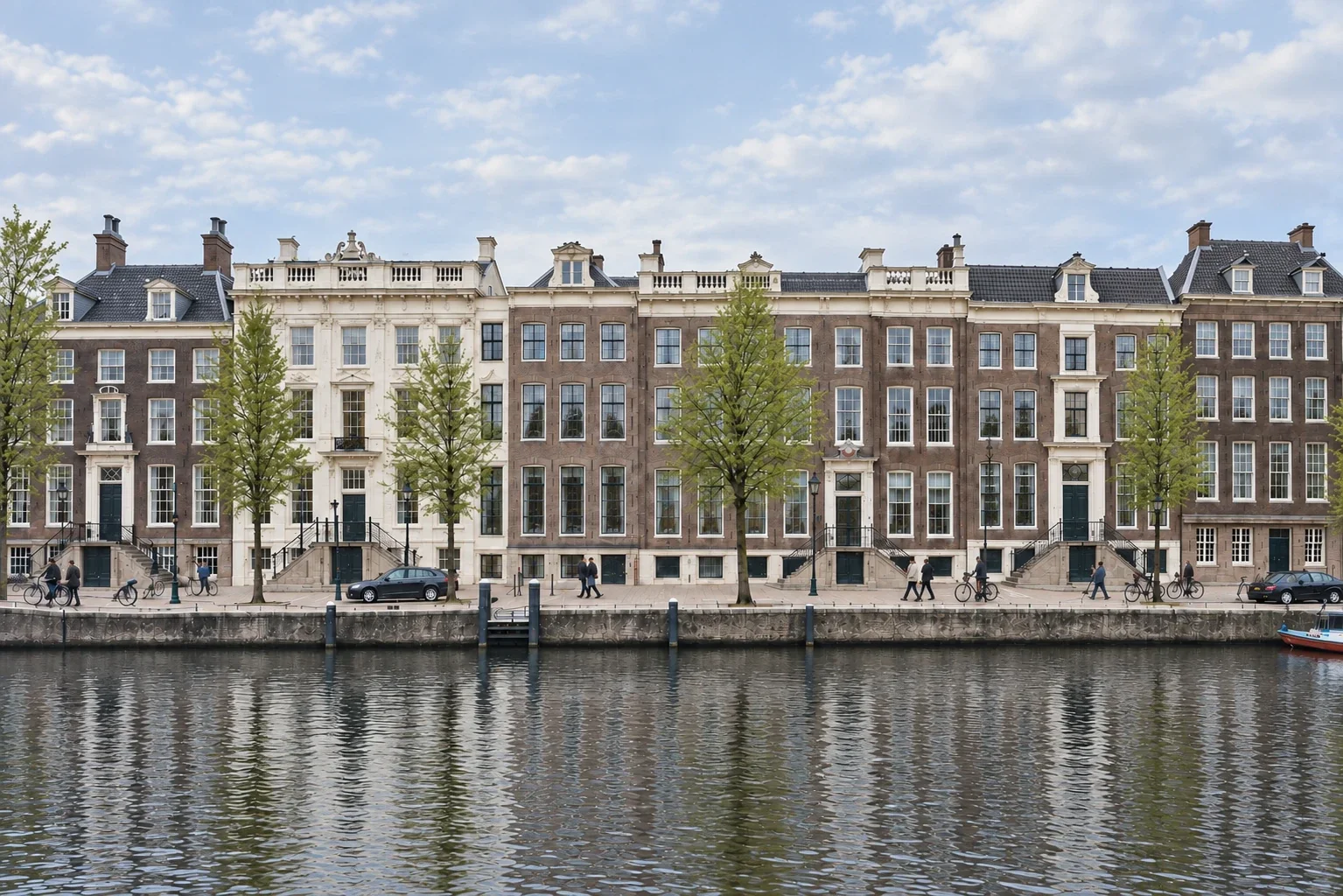
Existing urban assets in London and Amsterdam, selected to support long-term ownership.
Investment Parameters
Durable fundamentals. Identifiable potential.
01Mandate requirements
Each opportunity is assessed individually against the mandate agreed with the investor, and proceeds only on the investor’s approval.
02Selection parameters
Existing buildings and defensible occupational demand. For repositioning, business plans driven by specific, controllable improvements.
Income
Durable income with a clear basis in location, asset quality and occupational demand.
Explore Income →
Repositioning
Assets where targeted capital and sustained oversight can materially improve income or value.
Explore Repositioning →
/Income
Income
Durable income with a clear basis in location, asset quality and occupational demand.
What We Look For
Income evidenced by occupation, not by forecast
Lease terms, expiry profile and tenant covenant
Recurring and near-term capital requirements identified before pricing
Refinancing capacity and buyer depth at exit
Where the Downside Sits
Reletting cost, void period and landlord obligations at expiry
Cash flow if reletting takes longer than assumed
Capital expenditure arriving earlier or larger than assumed
Buyer depth at exit for an asset of this size and profile
/Repositioning
Repositioning
Assets where targeted capital and sustained oversight can materially improve income or value.
Identify the specific constraint limiting income or value.
What we assess
Vacancy and leasing
Layout and specification
Permitted use
Operating performance
Investment decision
Can the constraint be resolved in a controlled way, and would the resulting improvement be material to the investor’s mandate?
Appointed specialists prepare and price the plan; Reiwa coordinates their input into one business plan for the investor to approve.
What we assess
Works required
Leasing and operational changes
Costs and permissions
Delivery timetable and risks
Investment decision
Is the coordinated business plan, with its costs and risks, ready for the investor to approve?
Appointed contractors, letting agents and property managers deliver the works and operational change; Reiwa monitors progress and cost against the approved plan.
What we assess
Progress against the approved plan
Cost against the approved plan
Effect on letting prospects
Effect on income and exit options
Investment decision
Do letting prospects, income and exit options still support the investment case?
Selective Hospitality
A selective application, not a third strategy of equal breadth: operating requirements, local demand and the suitability of the building are considered together within the investment assessment.
Building Character
Existing buildings with architectural or locational distinctiveness that an operator cannot replicate elsewhere.
Demand Rooted in Place
Guest or occupier demand tied to the location itself, not dependent on a single brand, event or channel.
A Suitable Operating Model
A lease, management agreement or operating structure that matches the investor’s appetite for operational exposure.
Where We Draw the Line
Demand Cannot Be EvidencedOccupier demand resting on forecast rather than actual occupation
The Source of Improvement Is UnclearA repositioning case without a specific, costed source of improvement
Execution Risk Overwhelms the OpportunityConsents, works or leasing the investor cannot control or price
The Exit Depends on Too Narrow a Buyer PoolRealisation reliant on a single buyer type or market condition